Current/Radiation Shielding Evaluation
Radiation Shielding Evaluation
Development of Long-Range Free-Space Quantum Key Distribution (QKD) and Core Technologies for Satellite Quantum Secure Communications
In ProgressNov. 2022 – Present
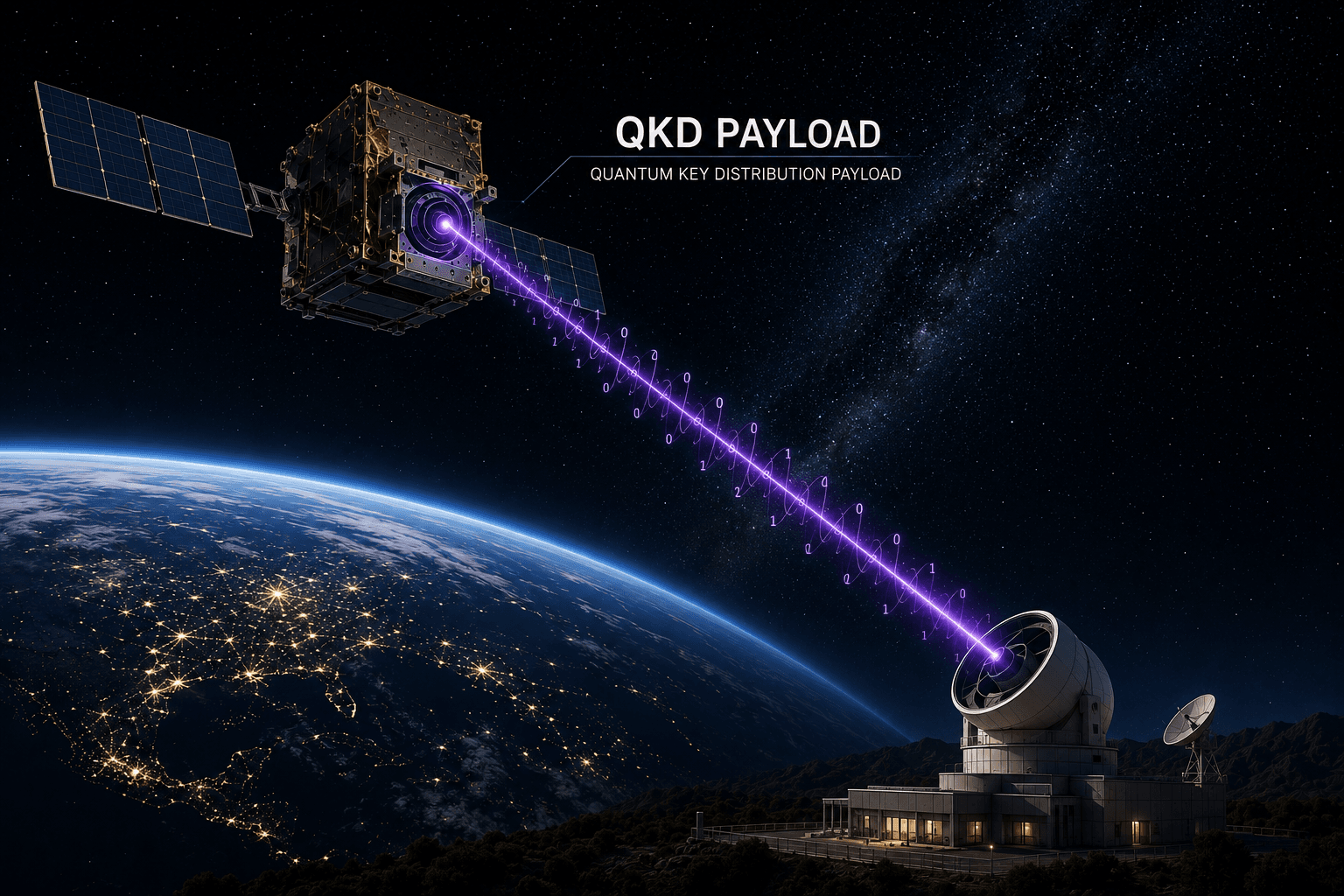
What is Quantum Key Distribution (QKD)?
Quantum Key Distribution (QKD) is a secure communication technology that enables two parties to generate and share cryptographic keys based on the fundamental principles of quantum mechanics. Because quantum states are altered when measured and cannot be perfectly copied, attempts by a third party to intercept the key distribution process can be detected. These characteristics make QKD a promising next-generation security technology capable of providing a high level of communication security even in future high-performance computing environments.
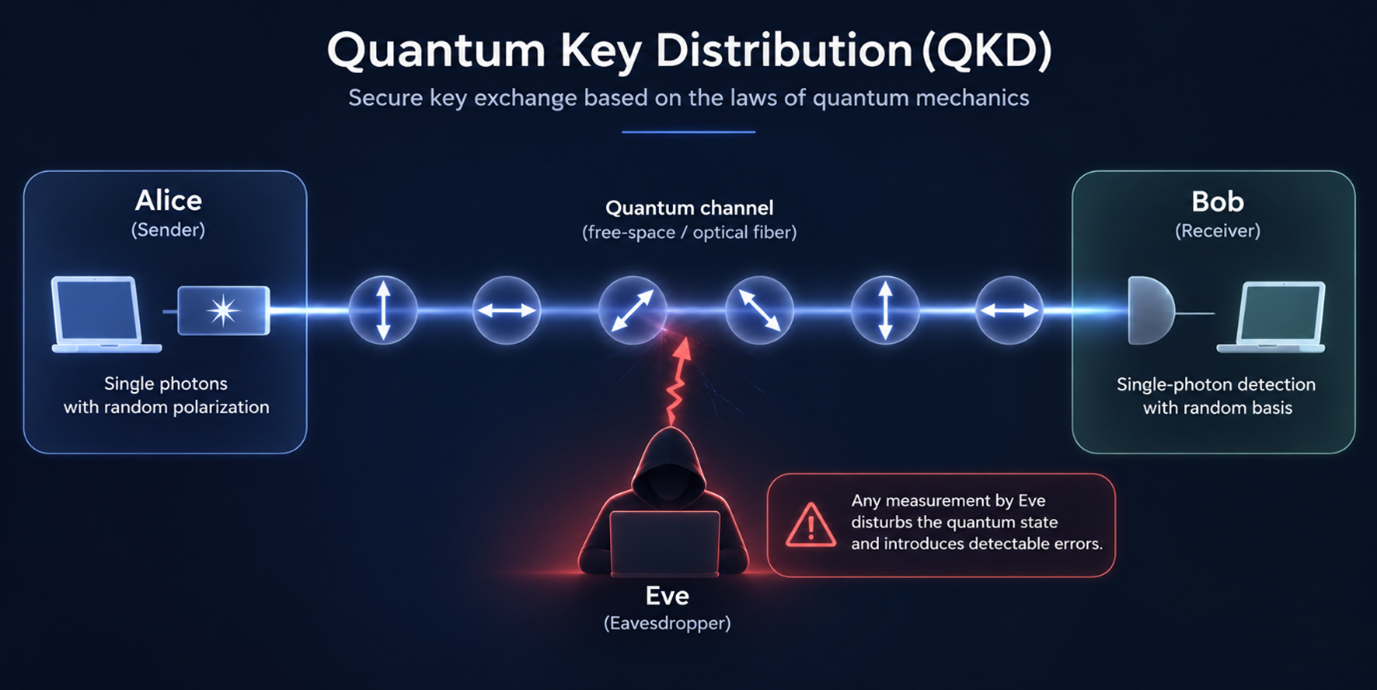
Fig.1 Schematic illustration of the basic principle of Quantum Key Distribution (QKD).
Space-Based QKD
Terrestrial QKD systems using optical fibers are limited in transmission distance because optical losses accumulate as the transmission distance increases. In contrast, satellite-based QKD utilizes free-space optical communication to exchange quantum signals between satellites and ground stations, enabling quantum key distribution over significantly longer distances.
Because satellites can provide coverage over large geographical areas, space-based QKD can connect widely separated ground stations and serve as an important technology for establishing global-scale quantum-secure communication networks.
To achieve this capability, a QKD payload responsible for generating, transmitting, receiving, and processing quantum signals must be capable of operating reliably in the space environment.
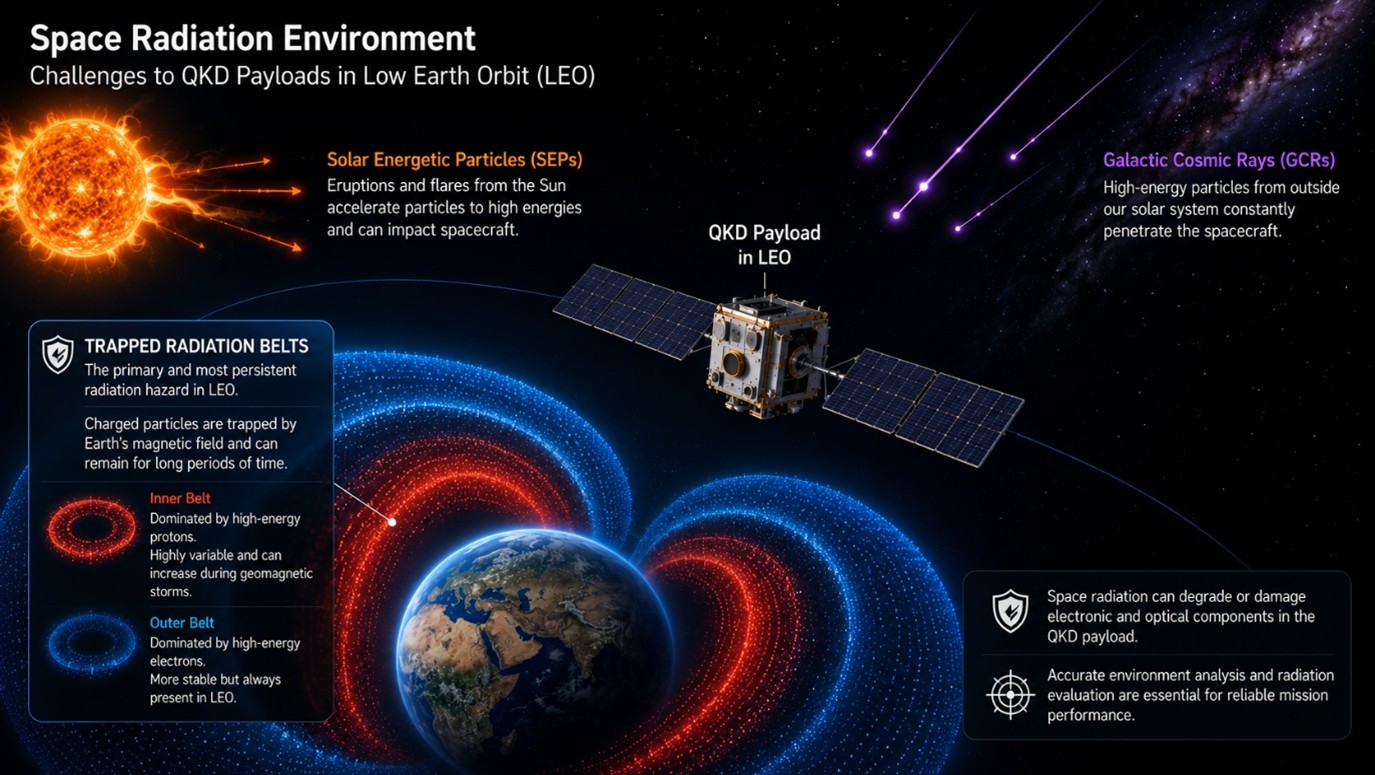
Fig2. Illustration of the space radiation environment affecting a QKD payload in low Earth orbit (LEO).
Space Radiation Environment and QKD Payloads
Unlike the terrestrial environment, spacecraft are continuously exposed to various types of energetic radiation, including high-energy protons, electrons, and heavy ions. These radiation particles can affect the performance and reliability of electronic components as well as optical and electronic systems within a satellite payload.
In particular, Total Ionizing Dose (TID), which accumulates in semiconductor devices during long-term radiation exposure, can alter their electrical characteristics and eventually lead to performance degradation or device failure. In addition, Single Event Effects (SEEs) caused by interactions between energetic particles and electronic devices are another major radiation concern that must be considered in the design of spaceborne electronic systems.
Therefore, to ensure reliable long-term operation of a QKD payload in space, it is essential to characterize the expected radiation environment and evaluate whether the payload and its critical components can withstand the anticipated radiation exposure throughout the mission.

Fig.3 Isotropically averaged radiation dose in a silicon target as a function of aluminum shielding thickness.
environments and the evaluation of the radiation tolerance of QKD payloads.
Based on the mission orbit and operational lifetime of the satellite, we characterize major components of the space radiation environment, including energetic electrons and protons. Radiation transport simulations are then performed using three-dimensional models of the QKD payload, taking into account its geometry and shielding characteristics. These analyses allow us to quantitatively evaluate radiation exposure at critical locations and components within the payload and estimate the accumulated radiation dose over the mission lifetime.
Ultimately, our research aims to ensure the reliability of QKD payloads in the space radiation environment and establish effective shielding strategies and radiation design criteria, contributing to the reliable operation of satellite-based quantum-secure communication systems.

Fig.4 Geant4-based Monte Carlo simulation of particle transport and energy deposition within the QKD payload structure.